
Introduction
Crate training an older rescue dog with separation fears and phobias requires patience, consistency, and a thoughtful understanding of canine behavior. Unlike puppies, older rescue dogs may arrive with established habits, uncertain histories, or negative experiences that make confinement frightening. Some panic when a door closes, while others become distressed when their owners leave the room.
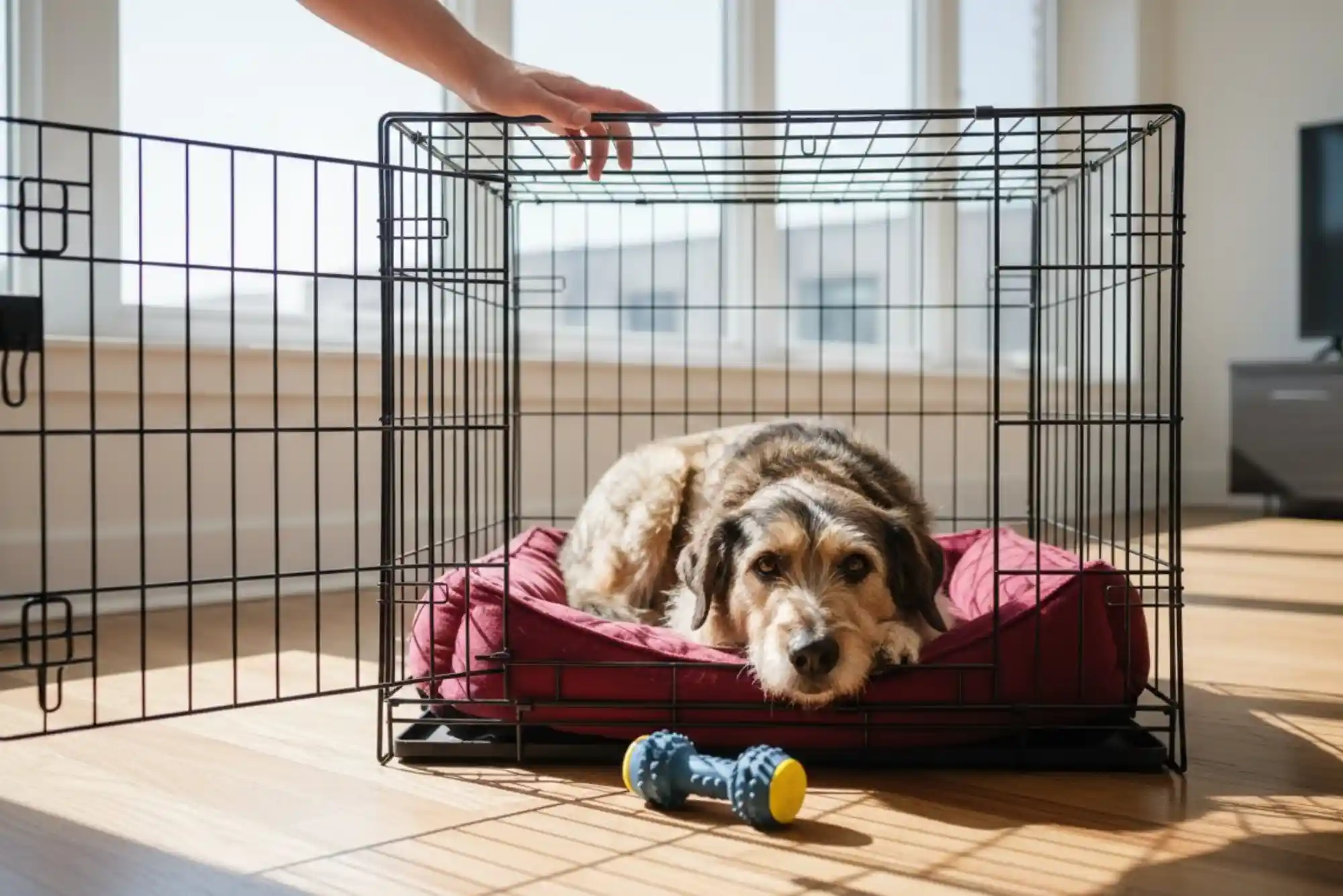
The goal is not simply to teach a dog to stay inside a crate. It is to help the dog feel safe enough to rest there voluntarily. When approached correctly, crate training can provide a comfortable retreat, support household routines, and make travel easier. However, forcing a fearful dog into a crate can intensify anxiety, particularly when the dog already struggles with separation-related distress or specific phobias.
This guide explains how to crate train an older rescue dog using positive reinforcement, gradual exposure, and practical strategies that respect the dog’s emotional limits. It also explains when a crate may not be appropriate and when professional support can make a meaningful difference.
Understanding Why Older Rescue Dogs Fear Crates
Before beginning crate training, consider why your rescue dog feels uncomfortable. Fearful behavior is communication, not stubbornness. Understanding its cause helps you choose a training approach that builds trust rather than creating additional stress.
Past Experiences and Unfamiliar Environments
Some rescue dogs have never used a crate, while others may associate confinement with punishment, neglect, transportation, or frightening shelter experiences. A dog that trembles, hides, or refuses to approach a crate may be responding to an association that developed long before arriving in your home.
Older dogs also need time to adjust to new surroundings. Changes in people, sounds, smells, and daily routines can make an unfamiliar crate feel particularly threatening.

Separation Anxiety and Fear of Being Alone
Separation-related problems occur when a dog becomes distressed as their owner prepares to leave or disappears from view. Signs can include persistent barking, pacing, panting, drooling, scratching doors, destructive behavior, or attempts to escape.
Crate training alone does not resolve separation anxiety. For some dogs, confinement makes the distress worse because they cannot move away from the perceived threat. If your dog panics whenever you leave, address the separation problem alongside any crate training.
Phobias and Sensitivity to Triggers
Some dogs fear thunderstorms, fireworks, traffic, unfamiliar people, or sudden household noises. Others are sensitive to metal sounds, enclosed spaces, or the sensation of a door closing.
Identify your dog’s specific triggers before introducing the crate. A dog frightened by loud noises, for example, may need a quiet training environment rather than a crate placed near a busy entrance.
Preparing the Right Crate and Environment
A suitable setup makes crate training more comfortable and reduces unnecessary pressure on a fearful dog.
Choose a Comfortable, Appropriate Crate
Select a crate that allows your dog to stand naturally, turn around, lie down comfortably, and stretch out. A crate that is too small can create physical discomfort, while an unsuitable design may make entry and exit difficult.
Some dogs prefer wire crates that provide visibility, while others feel safer in sturdy plastic crates with more enclosed sides. Observe your dog’s reactions rather than assuming one style works for every animal.
For dogs that have a history of escaping or injuring themselves in confinement, consult a veterinarian or qualified behavior professional before using a crate. A secure room or appropriately prepared exercise pen may be safer.
Create a Calm and Inviting Space
Place the crate in a quiet area where your dog can rest without being isolated from the household unnecessarily. Avoid busy walkways, slamming doors, and locations where sudden noises are common.
Add comfortable bedding if your dog does not chew or swallow fabric. A familiar blanket can help, although it is not essential. Keep the crate well ventilated, maintain a comfortable temperature, and provide water when appropriate for the duration and setup.
Never use the crate as punishment. Your dog should associate it with relaxation, good experiences, and the freedom to feel secure.
Prepare Rewards Before Training
Use small, appealing treats, favorite toys, and calm praise. For dogs that are nervous around food, simply rewarding an approach with gentle encouragement or allowing them to move away can be helpful.
Keep sessions short and end while your dog is still comfortable. Several brief, successful experiences are generally more useful than one long session that leaves the dog frightened.
How to Crate Train an Older Rescue Dog Step by Step
The most effective way to crate train an older rescue dog is to progress according to the dog’s behavior rather than following a rigid schedule. Some dogs become comfortable within days, while others need weeks or longer.
Step One: Let Your Dog Explore the Crate Freely
Begin with the crate door secured open. Allow your dog to investigate at their own pace without calling, pushing, pulling, or carrying them inside.
Place a few treats near the entrance. If your dog approaches confidently, gradually place rewards farther inside. If they hesitate, leave the treats closer to the doorway and give them time.
Reward voluntary investigation, even if your dog only sniffs the entrance. The first objective is to make approaching the crate feel safe.
Step Two: Build Positive Associations
Once your dog approaches comfortably, offer meals near the crate. Start with the food bowl outside, then move it closer over several meals if the dog remains relaxed.
Eventually, place the bowl just inside the entrance. Move it deeper only when your dog willingly follows. If your dog stops eating, stretches anxiously toward the food, or retreats, make the exercise easier.
You can also scatter treats inside or provide a favorite chew under supervision. Never withhold food to force a frightened dog into the crate.
Step Three: Encourage Voluntary Entry
When your dog willingly steps inside, calmly reward the behavior. Allow them to leave whenever they choose.
Repeat the exercise until entering becomes familiar. You may introduce a verbal cue such as “crate” when your dog begins moving inside voluntarily, pairing the word with the action and a reward.
Avoid luring the dog deep into the crate and then suddenly shutting the door. Predictability matters, especially for dogs that fear being trapped.
Step Four: Introduce the Door Gradually
Once your dog can rest inside with a relaxed body, begin introducing door movement without immediately closing it.
Move the door slightly, reward your dog, and return it to its original position. Gradually progress to briefly touching the door, moving it farther, and closing it for a moment.
Initially, the door may close for only one or two seconds. Open it while your dog is still calm, then reward them.
Increase the duration gradually. If your dog freezes, pants excessively, paws at the door, or tries to escape, return to an easier step. Do not expect a fearful dog to tolerate several minutes of confinement simply because they managed a few seconds.
Step Five: Practice While Staying Nearby
After your dog accepts brief door closures, sit beside the crate and offer calm reassurance if it helps them relax. Reward quiet resting, comfortable posture, and voluntary settling.
Next, practice standing up, sitting down, and taking one step away before returning. These small movements teach your dog that changes in your position do not automatically mean abandonment.
Keep the atmosphere relaxed. Avoid making every return an exciting event, as this can increase anticipation around your movements.
Step Six: Build Independence One Small Step at a Time
Gradually increase your distance from the crate. Walk across the room, briefly move out of sight, and return before your dog becomes distressed.
For dogs with separation fears, this stage may require separate, carefully structured alone-time training. Begin with absences so brief that the dog remains comfortable, potentially just a second or two.
A camera can help you identify subtle signs of anxiety, including pacing, repeated scanning, whining, or an inability to settle. Progress only when your dog remains relaxed at the current level.
Do not use prolonged crying as a training method. Distress does not teach a dog that confinement is safe, and repeated panic can make future training more difficult.
Helping a Rescue Dog with Separation Fears and Phobias
Crate training works best when it forms part of a broader plan for emotional well-being.
Recognize Early Signs of Stress
Watch your dog’s body language during every session. Lip licking, yawning, turning away, tucked tails, flattened ears, trembling, and repeated attempts to leave may indicate discomfort, although context matters.
More serious signs include frantic scratching, heavy panting unrelated to temperature, excessive drooling, persistent vocalization, and self-injury. Stop the exercise and reassess the plan if these behaviors occur.
A dog that appears quiet is not necessarily comfortable. Some fearful dogs freeze rather than struggle, so look for loose muscles, normal breathing, and a willingness to rest.
Manage Separation Anxiety Outside the Crate
Practice calm departures and returns without creating long periods of isolation. If your dog becomes distressed when you pick up your keys or put on shoes, work on those cues separately by repeating them without leaving.
For example, pick up your keys, put them down, and continue with your normal routine. Later, open the door briefly or step outside for a moment, provided the dog remains relaxed.
Increase difficulty gradually and avoid absences that trigger panic whenever possible. If your dog cannot tolerate even brief separations, consult a veterinarian or qualified separation-anxiety professional for an individualized plan.
Address Specific Phobias Carefully
For noise-sensitive dogs, choose training times when the environment is quiet. You can introduce mild versions of a trigger at a distance or volume that does not cause fear, pairing the experience with something pleasant.
This process, known as desensitization and counterconditioning, should remain below the dog’s fear threshold. Never expose a frightened dog to intense sounds in the hope that they will eventually get used to them.
During thunderstorms or fireworks, provide access to a safe hiding place that the dog already accepts. If the crate increases distress, allow another suitable refuge instead.
Use Professional Support When Needed
A veterinarian can help rule out pain, sensory changes, or other medical issues that contribute to anxiety. This is especially important for older dogs whose behavior changes suddenly.
A qualified, reward-based behavior professional can assess separation-related distress and develop a gradual training plan. In some cases, veterinary treatment or prescribed medication may be appropriate alongside behavior modification.
Avoid punishment-based methods, forced confinement, and advice that encourages a dog to endure severe distress. Fearful rescue dogs benefit from predictable routines and patient, individualized care.
Common Crate Training Mistakes to Avoid
One frequent mistake is progressing too quickly. A dog that enters the crate willingly may still feel frightened when the door closes. Each skill needs to be introduced separately.
Another mistake is using the crate whenever a dog behaves undesirably. Confinement should never be a consequence for barking, chewing, or having an accident. Instead, investigate the reason for the behavior and provide appropriate training.
Avoid leaving a panicking dog confined for extended periods. Dogs can damage their teeth, nails, or bodies while trying to escape. If this has happened, stop using the crate until you have professional guidance.
Finally, do not compare your rescue dog with another dog that learned crate training quickly. Age, temperament, previous experiences, medical needs, and anxiety levels all affect progress. Consistency matters, but flexibility matters just as much.
How Long Does It Take to Crate Train an Older Rescue Dog?
There is no universal timeline. A confident dog with little history of confinement may adapt relatively quickly. A dog with severe separation anxiety, trauma, or multiple phobias may need several weeks or months of carefully managed practice.
Measure progress by comfort rather than time. Voluntarily entering the crate, eating calmly nearby, resting with the door open, and tolerating brief door movements are meaningful achievements.
If progress stalls, reduce the difficulty instead of repeating a stressful exercise. A slower approach often creates a stronger foundation for long-term success.
Build Trust Before Expecting Independence
Crate training an older rescue dog with separation fears and phobias is ultimately about creating safety, not enforcing obedience. A comfortable setup, positive reinforcement, gradual exposure, and close attention to body language can help many dogs develop a healthier relationship with confinement.
Remember that a crate is a tool, not a requirement for every dog. If confinement intensifies your dog’s anxiety, a safe room, exercise pen, or another suitable arrangement may be a better choice while you address the underlying fear.
Start with one small step today. Let your dog explore the crate voluntarily, reward calm behavior, and progress only when they feel comfortable. If your dog shows severe anxiety or attempts to escape, seek guidance from your veterinarian or a qualified behavior professional. With a thoughtful plan and realistic expectations, you can help your rescue dog feel more secure and build confidence at their own pace.
FAQs
How do you crate train an older rescue dog?
Introduce the crate gradually, starting with the door open and rewards placed near the entrance. Encourage voluntary entry, build positive associations with meals and treats, and introduce brief door closures only after the dog feels comfortable. Increase duration and distance slowly, adjusting the process to the dog’s behavior.
Is it too late to crate train an older dog?
No. Older dogs can learn new routines, including comfortable crate use. Their progress depends on temperament, past experiences, health, and anxiety levels. Dogs with a history of frightening confinement may require more time and a gentler approach than dogs that are already comfortable in enclosed spaces.
Should I crate my dog if they have separation anxiety?
Not automatically. Some dogs find crates reassuring, but others become more distressed when confined. If your dog pants heavily, drools, vocalizes persistently, scratches frantically, or attempts to escape, stop using the crate until you have assessed the problem with a veterinarian or qualified behavior professional.
How long can an older rescue dog stay in a crate?
The appropriate duration depends on the dog’s health, age, toilet needs, comfort, and ability to remain relaxed. Begin with very short training sessions rather than aiming for a long confinement period. Dogs with separation-related distress should not be left confined for periods that trigger panic.
Should I let my rescue dog cry in the crate at night?
First determine whether the dog is briefly protesting, needs a toilet break, or is genuinely frightened. Persistent crying accompanied by panting, frantic scratching, trembling, or escape attempts suggests significant distress. Avoid leaving a panicking dog to cry it out. Make the setup easier and seek professional guidance if the problem continues.
What is the fastest way to crate train a fearful dog?
There is no safe shortcut that works for every fearful dog. The most effective approach is to use rewards, short sessions, and gradual steps that keep the dog below their fear threshold. Forcing entry or closing the door before the dog is ready can undermine trust and make training take longer.
What can I use instead of a crate for a rescue dog with anxiety?
Depending on the dog’s needs, a dog-proofed room, a comfortable gated area, or a suitable exercise pen may provide a better option. The alternative must be safe and should not trigger the same panic. Dogs with severe separation anxiety may need a tailored behavior plan regardless of the confinement method.