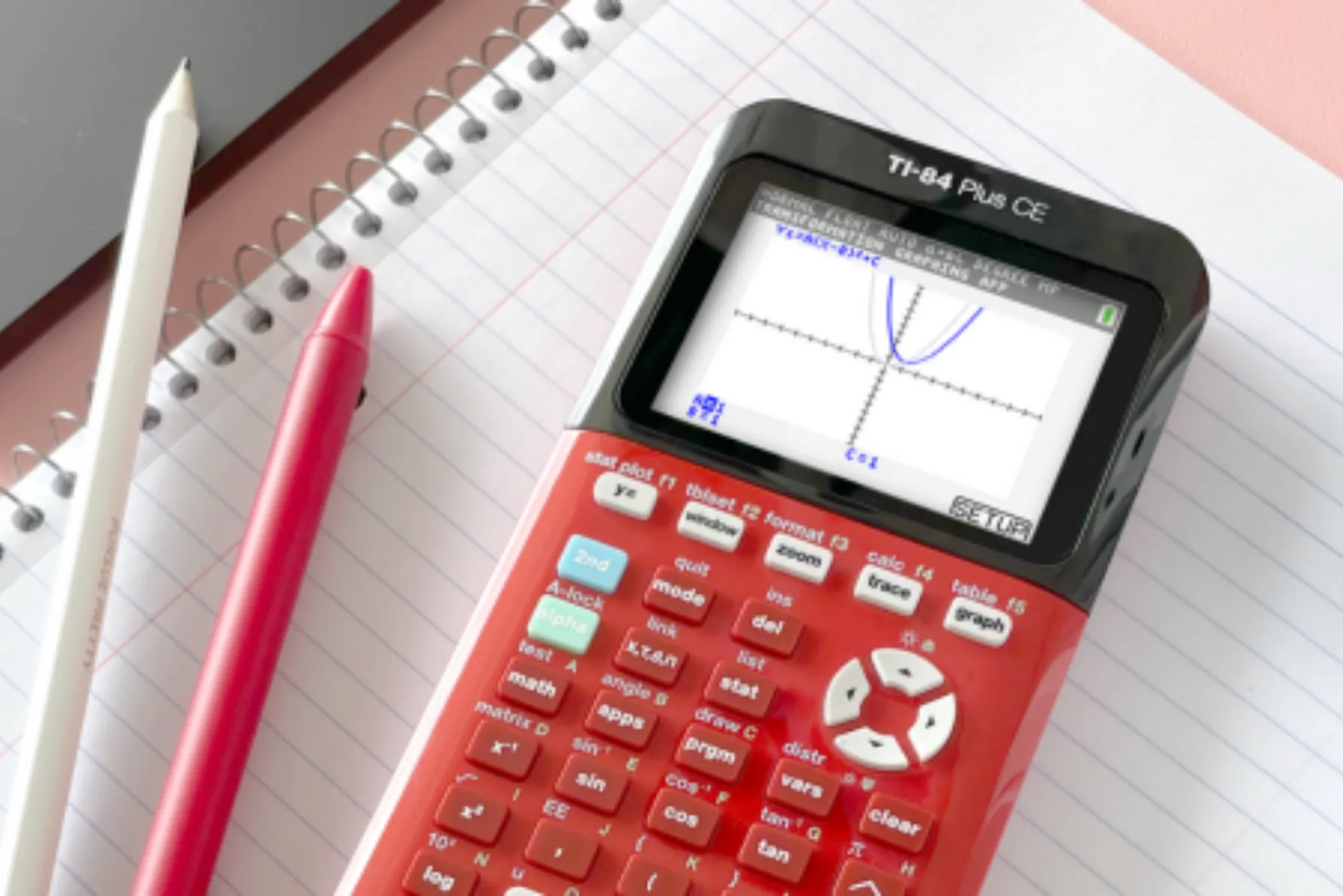

In today’s scientifically advanced world, the accurate application of chemistry concepts like the Ideal Gas Law plays a vital role in education, engineering, research, and industrial development. With increasing demand for digital precision tools in Pakistan, students, engineers, and startups now rely on online tools for smart and accurate calculations. That’s where modern Ideal Gas Law calculators transform how we learn, apply, and innovate.
What is the Ideal Gas Law
Quick Answer: The Ideal Gas Law is a formula that links pressure, volume, temperature, and gas quantity to describe how gases behave.
The Ideal Gas Law combines Boyle’s Law, Charle’s Law, and Avogadro’s Law. It uses the formula: PV = nRT, where each variable represents critical properties of gases such as pressure, temperature, and volume. This law helps engineers, chemists, students, and researchers calculate unknown gas properties with accuracy, saving both time and effort during analysis.
Why Use an Ideal Gas Law Calculator?
Quick Answer: It quickly calculates gas properties using PV=nRT accurately without manual errors.
Ideal Gas Law calculators perform instant calculations by plugging in known values to solve for unknown gas properties. Advantages include:
-
Reduces manual effort
-
Avoids calculation mistakes
-
Saves time in research and lab projects
-
Perfect for students, teachers, and professionals
These calculators are widely used in laboratories, petroleum industries, educational institutions, and manufacturing plants globally including Europe, Gulf, and South Asian countries.
How Does an Ideal Gas Law Calculator Work?
Quick Answer: You enter known gas values, and the calculator applies PV=nRT to find the missing variable.
These calculators require at least three known variables to compute the fourth. Example:
Enter:
-
Pressure (P)
-
Volume (V)
-
Temperature (T)
Output:
-
Moles of gas (n)
Some advanced calculators also support unit conversion between atmospheres, pascals, kelvin, liters, and cubic meters.
Digital Transformation in Chemistry Education
Quick Answer: Digital tools support smarter, more interactive learning in chemistry.
Pakistan is witnessing rapid academic digitalization. Higher education institutions like LUMS, PIEAS, and NUST now encourage smart lab tools, including gas calculators, simulation-based learning, and remote-access chemistry labs. These tools improve accuracy, learning speed, and conceptual clarity.
Benefits of Tech in Chemistry Education:
-
Real-time results
-
Interactive simulations
-
Error-free calculations
-
Enhanced STEM learning
Real-Life Applications of Ideal Gas Law
Quick Answer: The Ideal Gas Law is used in industries, research, weather science, and education.
Common Applications:
-
Weather forecasting and air pressure analysis
-
Gas storage in industrial tanks
-
Chemical manufacturing
-
Automobile airbags (gas expansion)
-
Respiratory equipment in hospitals
In Pakistan, industries like fertilizer production (Engro), ceramics, pharmaceuticals (GlaxoSmithKline), and rubber manufacturing regularly apply principles of Ideal Gas Law for process optimization.
Midpoint Backlink Placement – Use of Advanced Tools
Quick Answer: Advanced calculators ensure faster and more accurate chemical gas law computations.
To get precise results without manual effort, professional scientists and students now use an advanced ideal gas law calculator offered by dedicated platforms such as NeedsCalculator. It provides instant outputs, supports unit conversion, and is handy for lab reports, industrial projects, and academic simulations.
Smart Chemistry Projects for Students
Quick Answer: Using calculator tools helps students present better research projects.
Popular Project Ideas:
-
Gas behavior under different temperatures
-
Comparing real gas vs ideal gas
-
Designing small-scale pressure chambers
-
Weather and atmospheric pressure projects
Government-backed youth innovation programs such as PM’s National Innovation Fund (Pakistan) encourage students to create digital tools and chemistry-based apps using programming, formulas, and real-time data visualization.
How Technology Improves Precision in Chemical Calculations
Quick Answer: Technology enables simulations, accuracy, and industry-level problem-solving.
Digital calculators improve computations through:
-
Built-in error prevention
-
Instant validation
-
Unit conversion
-
Cloud-based research toolkits
These features help industries form safety protocols, optimize gas compression systems, and design sustainable chemical plants.
Innovation and Tech Development in Pakistan
Quick Answer: Pakistan is promoting smart science and tech-based startups.
Pakistan’s digital ecosystem is rapidly evolving. Platforms like the innovative technology company in Pakistan based at Dhanote IT Park are empowering startups, educators, and researchers through tech resources, incubation spaces, and innovation acceleration programs. These platforms are helping bridge the gap between theory, computation, and real-world applications.
Get Real-Time Chemical Solutions
Quick Answer: Use smart tools to calculate gas law results instantly.
Smart platforms now allow users to get quick and reliable calculations using automated tools that are accurate, fast, and optimized for both academic and professional use.
Expert Insight
Quick Answer: Experts recommend mixing formula knowledge with smart tools for better outcomes.
“Understanding the Ideal Gas Law is just the starting point—real innovation begins when you combine scientific knowledge with digital precision tools.”
— Dr. Arshad Mehmood, Chemical Process Engineer, Lahore
FAQs
1. What is the formula for the Ideal Gas Law?
PV = nRT, where pressure, volume, temperature, and number of moles are interconnected.
2. Can I use this law for real gases?
Yes, but with slight adjustments. Real gases deviate at high pressure or low temperature.
3. Is an Ideal Gas Law calculator useful for students?
Absolutely. It saves time, avoids manual mistakes, and improves report accuracy.
4. Where is this law used in Pakistan?
Industries, academic labs, weather departments, and training programs in Punjab, Islamabad, and Sindh.
5. Which units does the calculator support?
Atm, pascal, torr, liters, cubic meters, and kelvin are the most frequent.
6. Do engineering students use Ideal Gas Law calculators?
Yes, especially in chemical, mechanical, and petroleum engineering projects.
7. Is it useful for medical or environmental studies?
Yes, it’s used in respiratory equipment design and air quality monitoring.
Final Thought
As someone actively involved in Pakistan’s growing educational technology landscape, I believe that combining chemistry knowledge with digital computation tools enhances learning effectiveness and real-world application. With platforms like NeedsCalculator and innovation hubs such as Dhanote IT Park, our youth are empowered to explore smarter, more accurate, and research-driven digital tools. This blend of science and technology is shaping the future of innovation in Pakistan.