Introduction
As dogs grow older, jumping onto beds or into SUVs can become difficult. Senior dogs may develop stiffness, reduced strength, arthritis, or balance problems. Repeated jumping can also place unnecessary stress on their joints and muscles.
The Best Orthopedic Dog Ramps for Beds and SUVs: Preventing Joint Strain in Senior Dogs can provide a safer alternative to jumping. A properly designed ramp creates a gradual path between the floor and an elevated surface. This can make everyday movement easier while reducing the need for sudden leaps.
However, choosing the right ramp involves more than buying the longest or most expensive model. Ramp length, traction, width, stability, weight capacity, and your dog’s confidence all matter. The right choice should match where your dog needs assistance and how comfortably they can walk.
Why Senior Dogs Benefit From Orthopedic Ramps
Senior dogs often lose some muscle strength and joint flexibility as they age. Conditions such as arthritis can make jumping particularly uncomfortable. Even dogs that once jumped onto furniture without hesitation may eventually pause before making the leap.
A ramp changes the movement pattern. Instead of pushing off the ground and landing suddenly, your dog can walk gradually toward the elevated surface. This reduces the need for explosive movement.
Veterinary and pet-care guidance commonly recommends ramps as useful mobility aids for aging dogs, injured dogs, and dogs with reduced mobility. Whole Dog Journal also notes that ramps can help aging dogs maintain access to cars, beds, and other elevated areas.

This does not mean every senior dog needs a ramp. Some dogs prefer steps, while others may need veterinary assessment before using any mobility aid. A dog experiencing sudden weakness, pain, limping, or difficulty standing should be examined by a veterinarian.
What Makes the Best Orthopedic Dog Ramps for Beds and SUVs?
The Best Orthopedic Dog Ramps for Beds and SUVs: Preventing Joint Strain in Senior Dogs should provide a stable and gradual walking surface. The first feature to consider is ramp length.
A short ramp may create a steep incline, especially when used with an SUV. A longer ramp generally creates a gentler approach. Several senior-dog ramp guides recommend longer ramps for taller vehicles because steep inclines can discourage dogs with mobility problems.
Traction is equally important. Senior dogs may have weaker legs or reduced confidence on unfamiliar surfaces. A slippery ramp can make your dog hesitate or lose their footing.
Look for a surface that provides consistent grip. Carpet-like materials, textured rubber, and specialized traction surfaces can all work. The important factor is that your dog’s paws should remain secure throughout the climb.
Width also deserves attention. A narrow ramp may feel uncomfortable for a large or unsteady dog. A wider walking surface gives your pet more room to adjust their footing.
Choosing a Ramp for a Bed
Bed access is one of the most common reasons owners purchase a senior-dog ramp. Dogs often want to sleep near their owners, but repeatedly jumping from a bed can become uncomfortable.
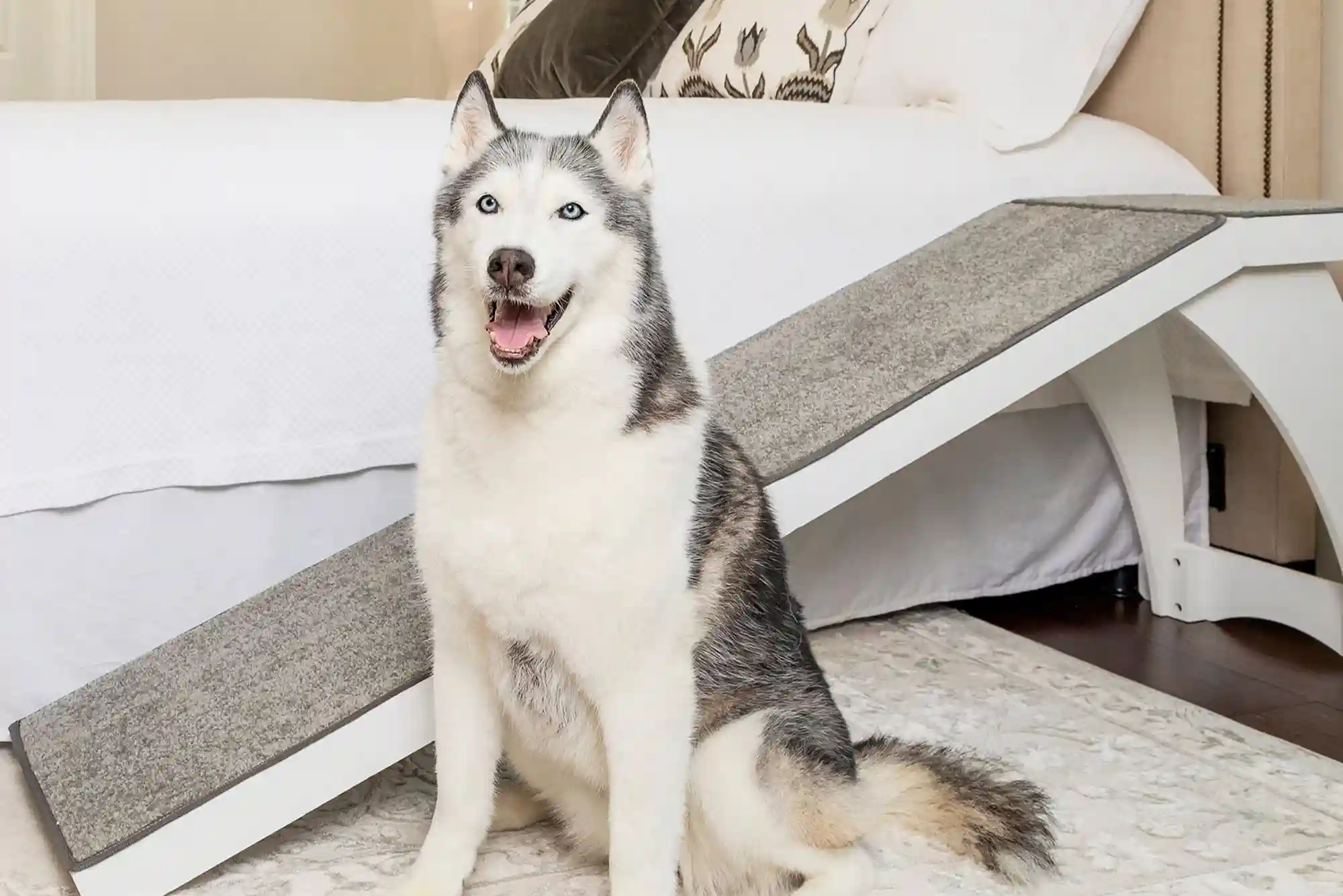
For bedroom use, consider a ramp designed specifically for furniture. A compact furniture ramp can be easier to leave beside the bed than a long vehicle ramp.
The ramp should meet the mattress at a comfortable height. It should also have a secure base that does not slide across the floor when your dog starts climbing.
A carpeted or textured surface can help because it feels familiar under the paws. Some indoor ramps are also designed with wood construction, allowing them to blend into bedroom furniture more naturally.
PetSafe’s CozyUp-style bed ramps are among the types designed specifically for furniture access, while longer ramps are more appropriate for vehicles. Current senior-dog guides distinguish furniture ramps from vehicle ramps because their required length and height are very different.
Choosing a Ramp for an SUV
SUV access requires a different approach. The cargo floor is significantly higher than most beds and couches. Therefore, a ramp that works well indoors may be far too short for vehicle use.
The Best Orthopedic Dog Ramps for Beds and SUVs: Preventing Joint Strain in Senior Dogs should be long enough to create a manageable incline when positioned against your vehicle.
Telescoping ramps are useful because their length can often be adjusted. Folding ramps can also work well when storage space is important.
For frequent SUV travel, look for a ramp with secure contact points and a reliable locking mechanism. The ramp should remain stable throughout your dog’s movement.
Never assume that a manufacturer’s maximum weight rating automatically means the ramp is suitable for your dog. Consider your dog’s movement as well as body weight. A hesitant dog can place uneven pressure on a ramp while climbing.
Ramp Length and Slope Matter
Ramp angle is one of the most overlooked considerations. A very steep ramp can create another mobility challenge rather than solving the original problem.
A longer ramp generally produces a gentler slope. For example, a 60-inch ramp may be more comfortable for an SUV than a 40-inch ramp when the vehicle has a high cargo floor.
Current senior-dog ramp guidance commonly discusses gentle inclines around the 18-to-25-degree range, with gentler angles often preferred for dogs with significant mobility limitations.
The exact angle should depend on your dog’s condition and the height you need to reach. If your dog struggles to walk uphill, consult your veterinarian or a veterinary rehabilitation professional before choosing a steep ramp.
Stability Is More Important Than Appearance
A beautiful ramp is not useful if it moves under your dog. Stability should therefore be one of your first purchasing considerations.
Check whether the ramp has non-slip feet or another method of staying firmly positioned. When using a vehicle ramp, make sure it sits securely against the vehicle before allowing your dog to climb.
The ramp should also be strong enough for your dog’s size. Weight capacity matters, but construction quality matters too. A ramp that flexes noticeably can make a nervous dog refuse to use it.
For large breeds, heavy-duty designs may provide additional stability. Products such as the PetStep Original Folding Pet Ramp are designed with larger weight capacities and wider surfaces for demanding applications.
How to Teach a Senior Dog to Use a Ramp
Even the Best Orthopedic Dog Ramps for Beds and SUVs: Preventing Joint Strain in Senior Dogs will not help if your dog refuses to walk across it.
Training should therefore happen gradually. Start by placing the ramp flat on the floor. Let your dog investigate it without pressure.
Next, encourage your dog to walk across the surface using calm praise and small rewards. Once your dog becomes comfortable, gradually increase the incline.
Do not pull your dog up the ramp or force them forward. Fear can make future training harder.
A veterinary physical therapist quoted by Whole Dog Journal recommends teaching dogs to use ramps before mobility problems become severe. Early training can make the ramp familiar when the dog eventually needs it.
Ramp or Stairs: Which Is Better for Senior Dogs?
There is no universal answer because every dog has different mobility needs.
A ramp provides one continuous walking surface. This can be useful for dogs that struggle with repeated stepping motions or jumping.
Stairs may require less floor space. Some dogs also find short, shallow steps easier to navigate than a long ramp.
The important consideration is how your individual dog moves. Observe whether your dog hesitates, slips, loses balance, or shows discomfort.
If your dog already has diagnosed arthritis, neurological problems, or another mobility condition, ask your veterinarian whether a ramp or stairs would be more appropriate.
Common Mistakes When Buying a Dog Ramp
One common mistake is buying a ramp based only on its weight capacity. A ramp can support a large dog while still being too steep or narrow for comfortable use.
Another mistake is choosing a short ramp for a tall SUV. The resulting incline may be difficult for an older dog.
Ignoring traction is another problem. Senior dogs need secure footing, especially when descending.
Storage is also worth considering. A ramp that is difficult to unfold or transport may eventually stop being used. For regular vehicle travel, folding or telescoping designs can be more convenient.
Finally, avoid assuming that a ramp eliminates every mobility risk. Your dog still needs supervision, particularly during the first few uses.
Frequently Asked Questions
Are ramps good for senior dogs?
Yes, ramps can be useful for senior dogs that struggle with jumping or have reduced mobility. They provide a gradual route to elevated surfaces and can reduce the need for repeated jumping. However, the ramp must be stable, appropriately sized, and easy for the individual dog to use.
Is a ramp or stairs better for dogs?
It depends on the dog’s mobility, confidence, physical condition, and the available space. Ramps provide a continuous incline, while stairs use separate steps. Dogs with particular joint or balance problems may benefit from one option more than the other.
How long should a dog ramp be for an SUV?
The required length depends on the height of the SUV’s cargo floor. Taller vehicles generally require longer ramps to create a gentler incline. Many current senior-dog guides recommend ramps around 60 to 84 inches for larger vehicles, depending on height and the dog’s mobility.
How do I get my dog to use a ramp?
Start with the ramp flat on the ground. Reward your dog for calmly walking across it. Gradually introduce an incline once your dog becomes comfortable. Never force a frightened or reluctant dog onto the ramp.
Are dog ramps safe for dogs with arthritis?
A properly selected ramp can make access to beds and vehicles easier for dogs with arthritis. However, it should provide strong traction and a manageable incline. Dogs with significant pain or mobility changes should receive veterinary guidance.
Conclusion
The Best Orthopedic Dog Ramps for Beds and SUVs: Preventing Joint Strain in Senior Dogs are designed around comfort, stability, traction, and appropriate incline. The right ramp can help an aging dog reach favorite places without relying on repeated jumps.