Introduction
Teaching a dog an emergency recall command is one of the most valuable things you can do for their safety. A reliable recall can help you call your dog away from a busy road, another animal, unsafe food, or another potentially dangerous situation. Unlike an ordinary “come” cue, an emergency recall is designed for situations where your dog must turn away from whatever has captured their attention and return to you immediately.
The important thing to understand is that reliable recall does not happen simply because a dog knows the word “come.” Dogs are constantly making choices based on what is rewarding and interesting around them. A squirrel, another dog, a fascinating scent, or an open gate can be far more exciting than their owner’s voice.
The goal of an emergency recall command is therefore to create an exceptionally strong positive association with one special cue. With consistent practice, appropriate rewards, and gradual exposure to distractions, your dog can learn that responding to this particular signal is always worth it.
What Is an Emergency Recall Command?
An emergency recall command is a special verbal cue or sound that tells your dog to return to you immediately, particularly when there is a potential safety concern.
You might use a unique word such as “here,” “now,” or another short cue. Some owners prefer an unusual word that they do not use during everyday conversation. The advantage of keeping the emergency cue special is that it is less likely to become meaningless through constant repetition.
An ordinary recall can be used during everyday training, while an emergency recall command should be treated as a high-value safety behavior. Your dog should learn that hearing this cue predicts an exceptionally rewarding experience.

It is also important to remember that no dog can be guaranteed to respond perfectly in every imaginable situation. Even well-trained dogs can become overwhelmed by powerful distractions. Responsible management, secure fencing, leashes, identification, and appropriate supervision remain essential.
Why Is an Emergency Recall So Important?
A dog can move surprisingly quickly when frightened or excited. If a door opens unexpectedly, a leash breaks, or a dog escapes from a yard, there may be only seconds to regain control.
An effective emergency recall command gives your dog a practiced response to fall back on. Instead of chasing them, shouting repeatedly, or grabbing desperately at their collar, you have a cue that encourages them to run toward you.
Recall is particularly important around roads, wildlife, unfamiliar dogs, water, and other hazards. AKC describes reliable recall as a potentially lifesaving skill because it can help owners bring dogs back during emergencies.
The key is to train before an emergency happens. Trying to teach recall for the first time while your dog is already running toward danger is far too late.
Choose a Special Emergency Recall Cue
The first step is choosing a cue that your dog does not already associate with everyday commands.
If your dog has heard “come” hundreds of times while ignoring it, using “come” as the emergency cue may not be the best choice. Repeatedly saying a cue without getting a response can weaken its meaning, sometimes creating what trainers call a “poisoned cue.” In those circumstances, starting with a fresh word can be helpful.
Choose something short and easy to say clearly. You could use a word such as “here,” “quick,” or another distinctive cue.
Once you choose the word, protect it. Do not casually use the emergency recall command when you want your dog to leave the sofa, go inside, take a bath, or stop playing.
Your dog should learn that this particular sound means something extraordinary.
Build a Powerful Positive Association
Before asking your dog to run toward you from a distance, teach them that the emergency cue predicts wonderful rewards.
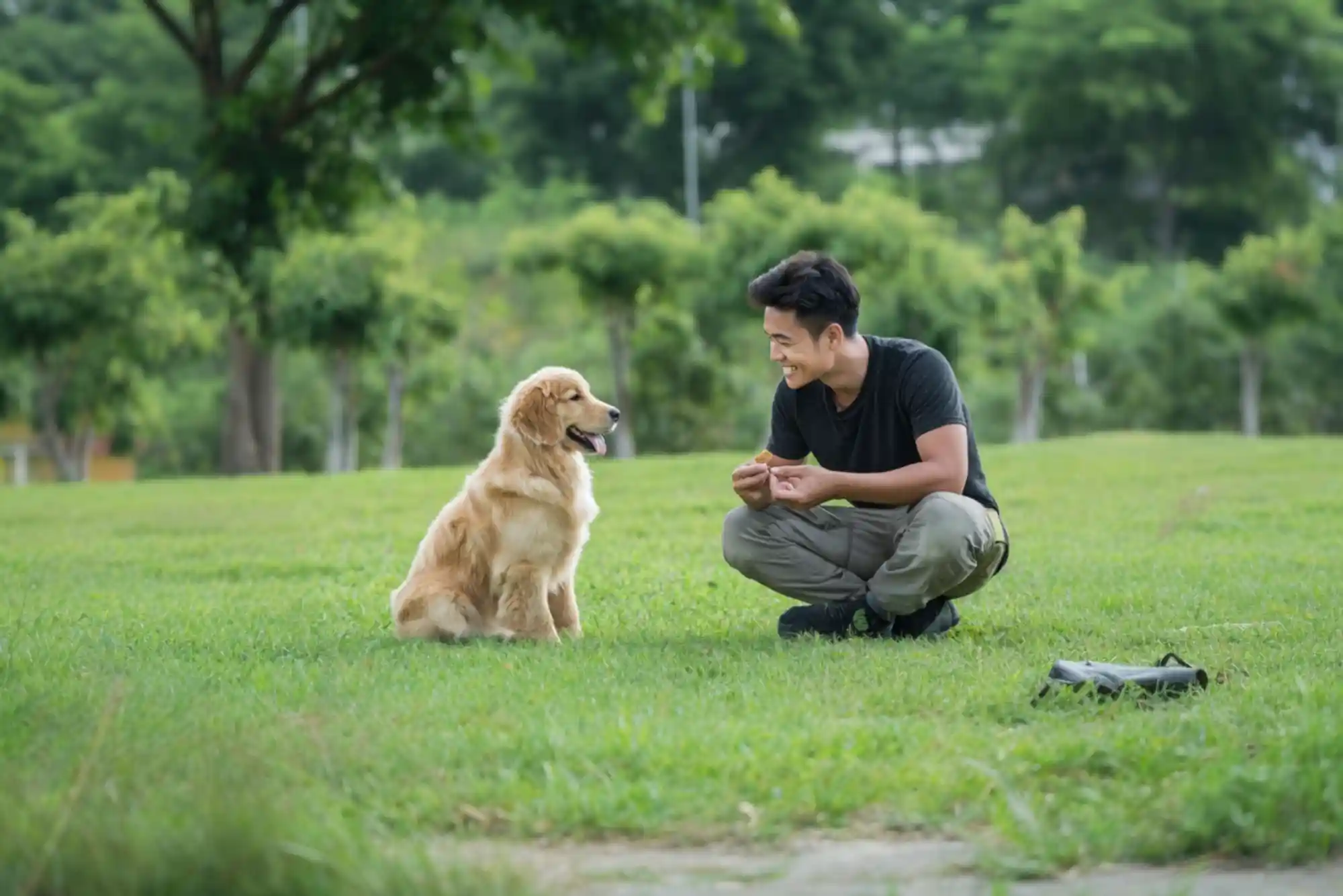
Start inside your home when your dog is relaxed. Say the emergency cue in an upbeat voice and immediately provide an especially valuable reward. You can use tiny pieces of a food your dog loves, provided that food is appropriate for them.
Repeat this process during several short sessions. At this stage, you are not testing obedience. You are building an association.
Your dog should gradually begin thinking, “That sound means something fantastic is about to happen.”
Positive reinforcement works especially well for recall because the dog learns that returning to the owner produces something desirable. Training guidance from AKC emphasizes using high-value rewards and making coming to the owner more rewarding than the competing activity.
Teach the Actual Emergency Recall
Once your dog has developed a strong association with the cue, you can begin asking for movement toward you.
Start only a few feet away in a quiet room. Say your dog’s name if needed to get their attention, followed by the emergency recall command. When your dog turns and moves toward you, become enthusiastic.
As soon as your dog reaches you, deliver the reward immediately.
Timing matters. Your dog needs to understand exactly which behavior earned the reward. Delayed reinforcement can make it harder for dogs to identify the behavior being reinforced.
Make the reward generous enough that your dog feels that coming to you was an excellent decision. Food can be combined with praise, petting, a favorite toy, or a short game.
The goal is not simply to make your dog obey. You want your dog to become excited about responding.
Practice the Emergency Recall Without Pressure
A common mistake is testing the emergency recall too early.
If your dog has only practiced indoors, calling them away from a squirrel in a park is an enormous jump in difficulty. Dogs learn skills in specific contexts, so recall needs to be practiced progressively in different environments.
Begin indoors. Then try another room. Next, practice in a secure yard or another safely enclosed location. After that, you can gradually introduce mild distractions.
A long training line can provide additional control when practicing outdoors. AKC recommends using long-line training as dogs progress toward reliable outdoor recall, rather than immediately allowing them to roam off leash.
Your dog should earn freedom through successful training rather than being expected to handle distractions they have never encountered.
Increase Distance Gradually
Distance changes the difficulty of recall.
A dog that happily runs three feet toward you may hesitate when you are 20 or 30 feet away. Instead of making a dramatic jump, increase the distance gradually.
Call your dog from a short distance and reward a successful response. When that becomes easy, add a little more distance.
If your dog stops responding consistently, do not keep repeating the cue. Move closer and return to an easier level.
Repeating a command over and over can teach the dog that the first cue does not really matter. It is better to make the exercise easier so your dog has an opportunity to succeed.
Add Distractions One at a Time
The real test of an emergency recall command is not whether your dog responds in a quiet living room. It is whether they can respond when something interesting is happening.
However, distractions should be introduced gradually.
Start with mild distractions such as another person nearby. Later, you might practice around toys, household activity, outdoor smells, or movement at a safe distance.
When your dog succeeds consistently, gradually increase the difficulty.
Do not begin by calling your dog away from their favorite dog, a running squirrel, or an exciting game. Those situations may be far beyond the dog’s current training level.
Successful recall training is about building a history of correct responses rather than repeatedly putting the dog in situations where failure is likely.
Make Coming to You Better Than the Alternative
Dogs naturally choose behaviors that produce rewarding outcomes. If running toward you ends every enjoyable activity, your recall can become less attractive.
For example, imagine your dog is happily exploring the yard. You call them, they come, and immediately you put on the leash and take them inside every single time.
Eventually, your dog may learn that coming when called means the fun is over.
Instead, practice recalls during enjoyable activities and sometimes reward your dog before releasing them back to what they were doing.
This teaches an important lesson: coming to you does not always mean losing freedom.
AKC specifically recommends avoiding the mistake of using recall only when playtime is ending. Randomly calling a dog during enjoyable activities, rewarding them, and then allowing them to return to play can help maintain a positive association.
Teach Your Dog to Accept a Collar Grab
An emergency recall is not complete if your dog runs to you but immediately backs away when you reach for their collar.
For safety, your dog should also become comfortable with being gently restrained after coming to you.
Practice this separately. When your dog approaches, calmly touch the collar and immediately reward them. Gradually build toward holding the collar for a moment before rewarding.
The exercise should remain comfortable and positive.
This skill is particularly useful if you need to secure your dog quickly after a recall. AKC also recommends teaching dogs to accept collar grabs as part of reliable recall training.
Never Punish a Dog for Responding
One of the most damaging recall mistakes is punishing a dog after they finally come back.
Perhaps your dog escaped, ignored you for several minutes, and eventually returned. You may understandably feel frustrated. However, scolding them after they arrive can teach them that returning to you is unpleasant.
From the dog’s perspective, they may not understand that the punishment is connected to their earlier behavior. They may simply learn that approaching you produces something frightening.
Instead, reward the return and address management and training afterward.
A reliable emergency recall command depends on your dog believing that returning to you is always a safe choice. AKC guidance consistently emphasizes avoiding punishment and maintaining positive associations with recall.
What If Your Dog Ignores the Emergency Recall?
If your dog ignores the cue during training, do not panic and do not repeat it repeatedly.
First, consider the difficulty of the situation. Was there too much distance? Was the distraction too exciting? Was your dog tired, frightened, or intensely focused on something else?
Move closer, reduce the distraction, and return to a level where your dog can succeed.
You should also avoid using the emergency cue casually when you already know your dog is unlikely to respond. Every failed repetition can weaken the reliability you are trying to build.
If your dog’s recall is consistently poor, a qualified reward-based trainer can help identify the problem and create a more structured training plan.
How Often Should You Practice an Emergency Recall?
Short, successful sessions are generally more useful than exhausting your dog with long drills.
Practice regularly in different safe environments. Keep the sessions upbeat and stop while your dog is still engaged.
As the behavior becomes stronger, you can vary the rewards while continuing to provide especially valuable reinforcement for difficult recalls.
The emergency cue should remain special throughout your dog’s life. Think of recall as a skill that needs maintenance rather than something you teach once and permanently finish.
Regular practice also helps prevent the cue from becoming irrelevant.
Common Emergency Recall Mistakes
One of the biggest mistakes is expecting perfection too quickly. A dog that responds beautifully indoors may struggle outdoors because the environment presents entirely different challenges.
Another mistake is using the emergency cue for unpleasant events. If the cue repeatedly predicts nail trimming, bath time, confinement, or the end of a favorite activity, its value can decline.
Repeating the cue when the dog does not respond is another common problem. Instead of teaching the dog that the first cue matters, repeated commands can become background noise.
Finally, avoid testing recall in dangerous environments simply to see whether the training works. A recall should be proven gradually in controlled conditions before you rely on it in higher-risk situations.
When Can a Dog Be Trusted Off Leash?
There is no universal point at which every dog becomes safe to walk off leash.
Breed tendencies, age, temperament, training history, prey drive, environment, and individual behavior all matter. Even a highly trained dog can react unexpectedly to wildlife, another animal, sudden noises, or unfamiliar surroundings.
Off-leash freedom should only happen where it is legally permitted and physically safe. A fenced area or appropriate enclosed space is often the best place to practice before considering more challenging environments.
A strong emergency recall command improves safety, but it should never replace responsible management.
Build Recall Before You Need It
Learning how to teach a dog an emergency recall command takes patience, consistency, and plenty of positive reinforcement. The most reliable approach is to make the emergency cue special, begin in a low-distraction environment, reward generously, gradually increase distance and distractions, and teach your dog that returning to you is always a great decision.
Do not wait for a dangerous situation to discover whether your dog’s recall works. Start with a few minutes of practice today, build the behavior slowly, and continue maintaining it throughout your dog’s life.
A strong recall could become one of the most valuable safety skills your dog ever learns. If your dog’s response remains inconsistent despite careful training, consider working with a qualified reward-based professional who can help you safely progress to more difficult situations.
FAQs
How do I teach my dog an emergency recall?
Start by choosing a unique recall cue and pairing it with an exceptionally valuable reward. Practice indoors first, then gradually increase distance and distractions. Always reward your dog for responding and avoid using the cue for unpleasant situations.
What is the best emergency recall word for a dog?
There is no single universally best word. Choose a short, distinctive cue that your dog does not already associate with another behavior. The most important factor is the positive association you build through consistent training.
How do I get my dog to come every time when called?
Build reliability gradually rather than expecting your dog to respond perfectly immediately. Use valuable rewards, practice in increasingly distracting environments, avoid repeating the cue, and occasionally allow your dog to return to whatever enjoyable activity they were doing.
What should I do if my dog ignores the recall command?
Do not repeatedly shout the cue or punish your dog when they eventually return. Reduce the distance or distraction, move closer, and practice at an easier level. Repeating the exercise successfully helps rebuild reliability.
Can an emergency recall really save a dog’s life?
A reliable recall can help an owner move a dog away from certain immediate dangers, such as traffic or hazardous areas. However, no recall is guaranteed in every situation, so supervision, secure containment, leashes, and other safety measures remain important.
Should I use treats every time my dog comes when called?
During early training, frequent rewards help establish a strong connection between the recall and a positive outcome. As the behavior becomes reliable, rewards can become more varied, while difficult or especially important recalls should continue receiving valuable reinforcement.